
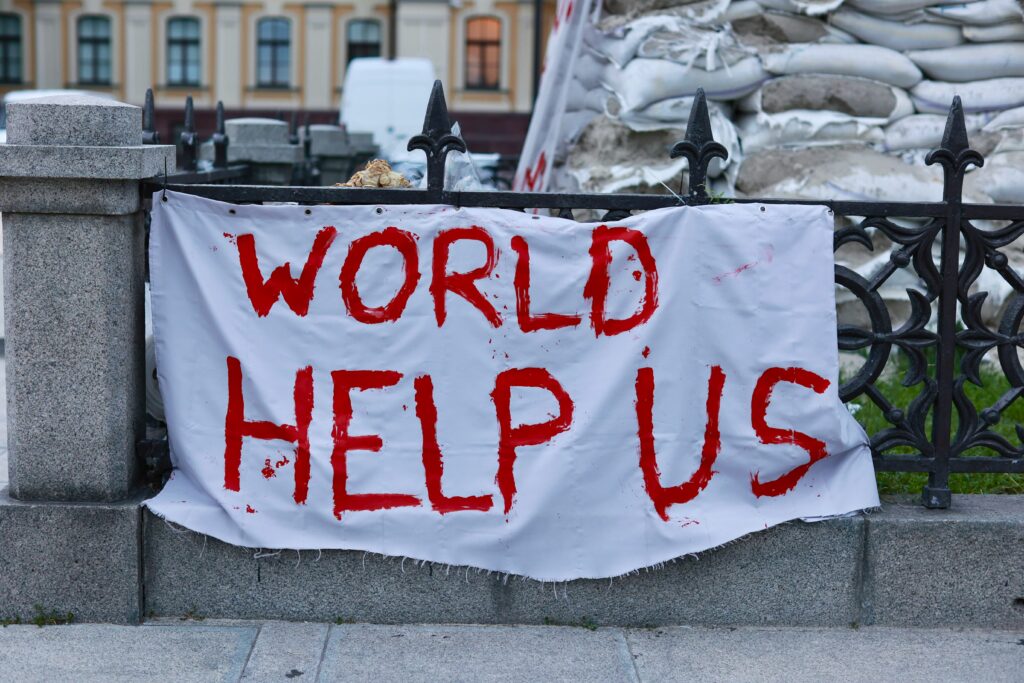
When aid convoys stopped arriving in a refugee camp near the South Sudan border, a young mother named Rovina did not know that the cause lay thousands of miles away in Washington, D.C., where an executive order had frozen foreign assistance and shut down vital programs. Her story is at the heart of Rovina’s Choice, a short documentary featured in The New Yorker’s searing report, “The Shutdown of USAID Has Already Killed Hundreds of Thousands.” It is a story of personal loss and of how political decisions in one capital can ripple across the world and fracture the fragile system that underpins global security.
A Legacy of Global Impact
For more than sixty years, the United States Agency for International Development (USAID) was a cornerstone of international development and humanitarian assistance. Its budget was modest compared to U.S. military spending, roughly twenty-four dollars per American taxpayer, yet its global reach was extraordinary. The agency supported health systems in Ukraine during wartime, contained twenty-one outbreaks of infectious disease, and sustained programs fighting HIV, tuberculosis, and polio. It helped reduce maternal and child mortality in dozens of low-income nations and trained local health workers who became the first responders of their communities.
According to figures cited in The New Yorker, a peer-reviewed study estimated that USAID programs saved ninety-two million lives over two decades, a quiet, consistent triumph of prevention and care achieved for a fraction of the world’s defense budget. Through this work, USAID embodied the idea that security and compassion are not opposites but complements.
The Sudden Unravelling
That legacy began to unravel in early 2025. Within hours of the new administration’s inauguration, an executive order suspended all foreign assistance. The cable sent by the Secretary of State was blunt: stop everything. No salaries could be paid, no supplies distributed, no programs continued. There was no warning to partner governments or NGOs on the ground. Within weeks, more than four-fifths of USAID’s contracts were terminated.
The agency’s global infrastructure (hospitals, logistics chains, data networks, community health partnerships) went dark almost overnight. The New Yorker describes this as a form of “public man-made death,” borrowing historian Richard Rhodes’s phrase for deaths that result from deliberate policy, not disaster. As of November 2025, the estimated toll of that policy stands at six hundred thousand people, two-thirds of them children.
Human Security at Risk
From a human-security perspective, one that prioritizes the safety and dignity of individuals rather than the power of states, the implications are devastating. Human security depends on stable access to food, health care, and protection from disease. When those systems collapse, insecurity multiplies in invisible but compounding ways.
Malnutrition weakens immune systems, untreated illness spreads through communities, and health-care workers migrate elsewhere in search of stability. The New Yorker describes how, in one Kenyan refugee camp, two-thirds of community health workers were laid off and food-aid rations dropped to forty percent of what was needed. In such spaces, the line between crisis and catastrophe thins until it disappears entirely.
The dismantling of USAID did not merely interrupt services; it dismantled resilience. For millions of people who depended on the continuity of health and nutrition programs, this policy shift became an existential threat. The slow violence of hunger, disease, and neglect replaced the preventive architecture that had once held those dangers at bay.
Global Security Implications
The consequences extend far beyond humanitarian suffering. USAID was also an instrument of global stability, a bridge between diplomacy and development. Strengthening governance, reducing poverty, and supporting local resilience helped prevent the conditions that breed extremism and conflict. Its programs were a form of soft power, expressing solidarity where military power could not.
The loss of that capacity creates vacuums in fragile states, where instability spreads more easily and where other geopolitical actors can step in to redefine alliances and norms. What looks domestically like bureaucratic downsizing becomes, on the world stage, a strategic retreat. The dismantling of USAID weakens the moral standing of the United States and the collective ability of the international system to anticipate and prevent crises before they erupt.
The Ethical Dimension
The ethical dimension of this collapse is impossible to ignore. The destruction of USAID required no bombs, no earthquakes, no natural calamities, only an administrative act and political indifference. Critics of foreign aid often point to inefficiency or dependency, and The New Yorker acknowledges those concerns, noting that USAID sometimes fostered dependency and occasionally suffered from bureaucratic inertia. Yet imperfection does not justify abandonment.
When the remedy for inefficiency becomes the elimination of life-saving systems, the cure is far worse than the disease. What is at stake is not only the credibility of a single institution but the moral foundation of global cooperation itself. The article poses a silent but piercing question: what happens when the world’s wealthiest nation, capable of saving millions, chooses not to?
Lessons and Reflections
The dismantling of USAID reveals several deeper truths about the architecture of global security. Institutions that sustain life must not be treated as partisan ornaments; development and health systems require continuity across political cycles because their benefits unfold over decades, not election seasons. USAID achieved immense results with minimal resources, proving that prevention is far less costly morally, economically, and strategically than reaction. It also exposes the illusion that human security can be detached from national or global security. Disease, displacement, and hunger do not stop at borders; they radiate outward, carrying instability in their wake. In dismantling an institution designed to address those threats at their source, policymakers have exchanged long-term stability for short-term ideology. The tragedy is that this collapse came quietly. No headlines marked the moment. No breaking-news chyrons counted the growing toll. The deaths are scattered, slow, and easily overlooked. Yet in scale and consequence, they rival those of war.
Conclusion
The dismantling of USAID was not merely a bureaucratic shift. It was a moral and strategic failure. It marked the deliberate withdrawal of one of humanity’s most effective defense systems against hunger, disease, and despair. The tragedy is not only that hundreds of thousands have already died, but that their deaths occurred in silence.
History will one day measure this period not by the rhetoric of sovereignty or fiscal restraint, but by the lives unprotected when help was withdrawn. To dismantle USAID was to dismantle one of the few global mechanisms designed to make insecurity less inevitable. In the long arc of human security, this act will be remembered not for what it saved, but for what it surrendered.
Reference
Masha Gessen, “The Shutdown of USAID Has Already Killed Hundreds of Thousands.” The New Yorker, November 2025.